Sleep in Our Later Years: What Really Matters—and What Helps
Jul 16, 2026A good night’s sleep can make all the difference in how we feel, move, and engage with the day ahead. Energy, mood, motivation, and overall enjoyment of life are closely tied to sleep, and residents across our communities tell us they know this well.
Recently, nearly 430 independent living residents from across the country shared their sleep experiences through the LCS Sounding Board, a national online research panel made up of independent living residents across LCS communities. Designed to capture the voice of residents, the Sounding Board helps LCS gather survey-based insights on key aspects of community life to inform decisions, enhance resident satisfaction, and support innovation across the senior living communities it serves. Their responses paint an honest, hopeful picture of sleep in later life: generally good, often interrupted, and deeply personal.
Here’s what residents had to say and key takeaways to help you sleep easier later in life.
Sleep in Later Life: Generally Good, Often Changing
Surprisingly, many residents report sleeping reasonably well. In fact, two-thirds of respondents rated their sleep positively, with an average score of 7 out of 10. Most also said they’re only slightly concerned, or not concerned at all, about their sleep quality.
At the same time, more than half shared that their sleep has changed over the years, often becoming lighter or more interrupted than it was earlier in life. This combination is important: sleep doesn’t have to be perfect to be meaningful, but even small improvements can make everyday life feel better.
And nearly everyone agrees on one thing: good sleep matters. Nine out of ten residents say sleep is important to their quality of life.
This finding aligns with guidance from the National Institute on Aging, which notes that sleep supports energy, mood, memory, and daytime functioning in older adults. It is also reinforced by a U.S.-based study published in the American Journal of Geriatric Psychiatry, which found that better self-reported sleep quality among adults age 75 and older was associated with stronger physical and mental health-related quality of life.
Nighttime Wake‑Ups Are the Norm, Not the Exception
If you wake up during the night, you’re far from alone.
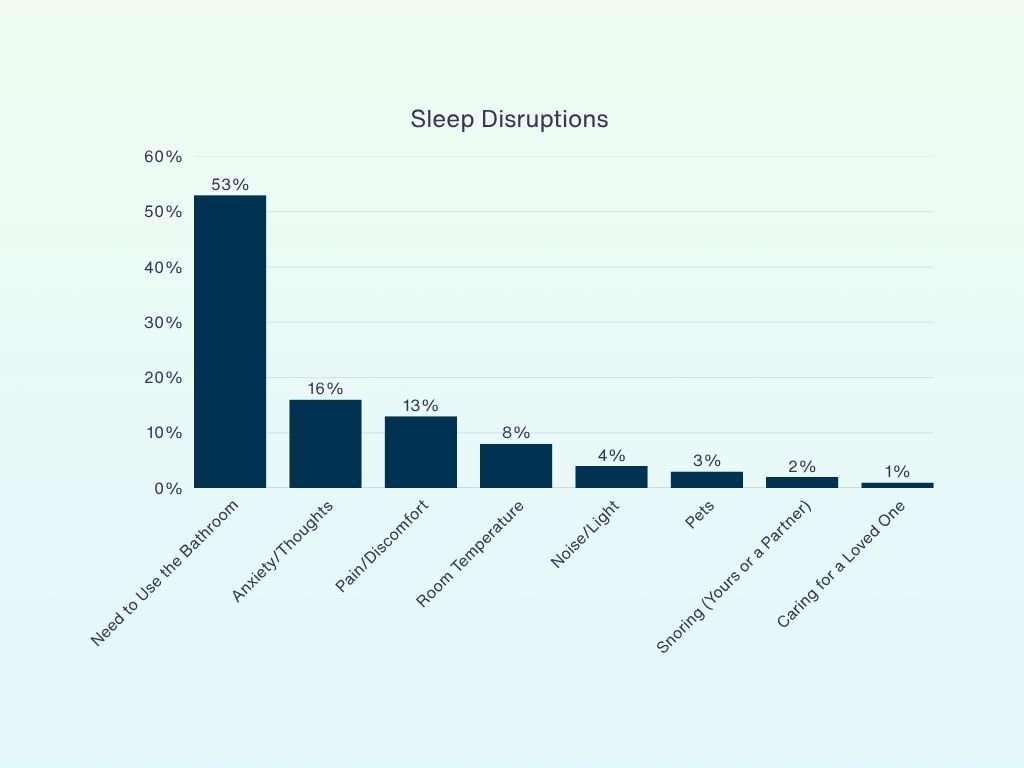
Most residents report waking two or three times each night, and very few sleep straight through. The most common reason? The need to use the bathroom, by a wide margin. Other factors like pain, anxiety, noise, or room temperature play a role for some, but nighttime bathroom trips are the most shared experience.
Because of these interruptions, staying asleep emerged as the most common sleep challenge, more than falling asleep or waking too early.
How Sleep Shapes the Day Ahead
Residents described their mornings in a range of ways, but overall, the results were mixed. Many feel somewhat rested, while others experience mornings that are just okay.
What’s clear is how much sleep affects the next day. Residents say sleep most strongly influences energy, motivation to be active or social, and mood. In other words, sleep sets the tone for the day ahead, both physically and emotionally.
Because sleep can shape so much of the next day, many residents rely on simple, familiar routines to help them wind down. Most residents have a regular bedtime routine, and those routines often include watching TV, reading, personal care, or taking medications. These calming, predictable habits can help signal to the body that it’s time to rest.
Sleep schedules are also consistent for most people, with common bedtimes around 10:30 p.m. and wake times near 7:00 a.m. That regularity can support healthier sleep, even when nights are interrupted.
Creating a Comfortable Sleep Environment
Residents overwhelmingly feel their home environments support good sleep. Small comforts go a long way, including:
- Fans for airflow
- Blackout curtains or shades
- Nightlights for safety
- Comfortable pillows and adjustable mattresses
Most people prefer bedroom temperatures in the low 70s, highlighting how temperature, and the ability to adjust it, can influence sleep comfort.
A Light‑Touch Approach to Sleep Aids and Naps
Many residents prefer a light‑touch approach to supporting sleep. Regular use of sleep aids is relatively low, though magnesium, melatonin, and prescribed medications are used by some.
Napping is common but not routine. When residents do nap, it’s usually for 20–40 minutes, often in response to low energy, poor sleep the night before, or simply for relaxation.
Learning, Talking, and Staying Curious About Sleep
Slightly more than half of senior living residents haven’t talked with a healthcare provider about their sleep, even though many experience nightly interruptions. Most also don’t track their sleep, though those who are often using wearable devices and say these devices help them better understand their patterns and habits.
When asked what kind of sleep support is valued most, residents prioritized easy‑to‑access education: printed tips, resources, and webinars over more complex solutions.
What Residents Teach Us About Rest and Resilience
Perhaps the most meaningful insight from the Sounding Board isn’t about hours or routines but about acceptance and curiosity.
Residents shared thoughtful reflections about learning to quiet the mind, adjusting expectations, navigating change, and wondering how flexibility in retirement affects sleep quality. These reflections remind us that sleep is not just a physical process, but a deeply human one, shaped by history, health, habits, and heart.
While no two sleep journeys are the same, one thing is clear: paying attention to sleep—and giving ourselves grace as it changes—can help us feel more energized, balanced, and ready to enjoy each day.
If you’re interested in learning more about ways to support better sleep, watch for upcoming tips, programs, and conversations designed with resident experiences at the center.
Listening First. Living Better.
At LCS, we believe better living begins with listening. Insights from the LCS Sounding Board help shape conversations, programs, and resources grounded in real resident experiences, like how sleep changes, what truly helps, and where compassion matters most. As we continue learning from residents across our communities, we remain committed to supporting well‑being in ways that feel thoughtful, personal, and human. Explore more resident insights and stories shaping life at LCS.
